• Polski
  • English
  • AAFont size
  • PJM translator
  • UniLodz accessibility
 
University
  • Management
  • Faculty Council
  • Committees
  • University
    • Management
    • Faculty Council

No phrases to display
Baner strony
Katedra Technologii i Chemii Materiałów
Department of Materials Technology and Chemistry
  • Research
    • Research profile
    • Research projects
    • CheMatSustain
    • HYMEC
    • TANGO (3rd competition under the Joint Undertaking of NCBiR and NCN)
    • Nanoparticles for biomedical applications
  • Publications And Conferences
    • Publications
    • Conference presentations
  • Experimental techniques and apparatus
    • Experimental techniques and apparatus
    • Scanning Probe Microscopy (SPM)
    • Scanning Electron Microscopy (SEM)
    • FTIR
    • RF plasma
    • Sputter coater
    • KRÜSS DSA25
    • LB
    • Electrospray deposition
    • Microtribometer
    • Macro-scale friction
  • Staff
    • Faculty
    • PhD Students
  • Galleries
    • SEM for FUN
  • History
  • Contact

AFM

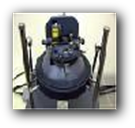
SOLVER P47

Atomic Force Microscope (AFM) and Scanning Tunneling Microscope (STM), NT-MDT

It allows the study of the properties and surface topography of nanomaterials on the micro and nano scale, with particular emphasis on the measurement of friction forces and the characteristics of self-organizing materials.


AFM:

General capabilities:

Determination of the surface topography of metallic, ceramic, polymer and composite materials. Characterization of nanoobjects and nanometer structures. Testing of friction, wear, adhesion and capillary forces at the nano and micro levels.

Specific applications:

1. Thin organic layers and polymers

  • Research on thin and ultrathin layers and monolayers of organic compounds on various metallic and ceramic substrates - measurement of layer thickness, friction testing at the nano- and micro-scale.
  • Characterization of topography and testing of frictional and mechanical properties of polymers (e.g. polyurethanes, polymethacrylates, silicone polymers) and other commonly used materials and polymer composites. (e.g. for biological applications: catheters, dressing materials, etc.)

2. Thin ceramic and metallic layers

  • Topography studies and friction characteristics of ceramic layers obtained by sol-gel, dip-coat methods, sputtered layers, plasma-deposited layers, CVD/PVD layers

3. Research on magnetic materials

  • Determination of domain structure in magnetic materials

4. Tests and research of information media

  • Analysis of CD/DVD disks and other data carriers with magnetic information recording

5. Research on the mechanical properties of nanoobjects

  • Measurements of the Young's modulus of carbon nanotubes

6. Biological research

  • Visualization of biological macromolecular systems, examination of collagen structures, erythrocytes, DNA strands, etc.

STM:

General capabilities:

Determination of the surface topography of conductive materials. Characterization of nanoobjects and nanostructures with atomic resolution

Specific applications:

  • Imaging of SAM-type reconstruction nanocomposite materials placed on a gold surface
  • Morphological imaging of the electronic properties of carbon nanotubes
  • Nanoparticle analysis
  • Determination of structures in thin layers of organic semiconductors from the thiol group
  • Observation of adsorption layers of organic compounds from solutions on the surfaces of electrically conducting materials
  • Characterization of topography of ceramic layers obtained by the CVD/PVD method
  • Characterization of nanostructures of conductors and semiconductors using STM/STS
Godło
bip
hr
hr
Faculties and Units
  • Faculty of Biology and Environmental Protection
  • Faculty of Chemistry
  • Faculty of Economics and Sociology
  • Faculty of Educational Sciences
  • Faculty of Geographical Sciences
  • Faculty of International and Political Studies
  • Faculty of Law and Administration
  • Faculty of Management
  • Faculty of Mathematics and Computer Science
  • Faculty of Philology
  • Faculty of Philosophy and History
  • Faculty of Physics and Applied Informatics
  • University of Lodz Branch in Tomaszów Mazowiecki
  • Scientific Centres and Research Teams
  • University of Lodz Library
  • Lodz University Press
Shortcuts
  • UniLodz mail
  • USOSWeb
  • Employee Portal
  • Moodle e-learning platform
  • UniLodz Experts
  • Privacy policy
  • Accessibilty
  • Faculties and Units
  • UniLodz store
  • Privacy Policy
  • About the website
  • Accessibilty


Faculty of Chemistry


Tamka 12 Str.,
91-403 Lodz

tel: 42/635 57 44, 42/635 57 43
fax: 42/635 57 44

Funduszepleu
Projekt Multiportalu UŁ współfinansowany z funduszy Unii Europejskiej w ramach konkursu NCBR
Questions? Virtual assistant

Essential cookies enable basic functions and are necessary for the website to function properly

Statistics cookies collect information anonymously. This information helps us to understand how our visitors use our website.

Our website uses cookie files (so-called cookies) for statistical, advertising and functional purposes. Thanks to them, we can customize the site to Your needs. Anyone can accept cookies or have the option to disable them in the browser, so that no information will be collected
Navigate to Privacy Policy