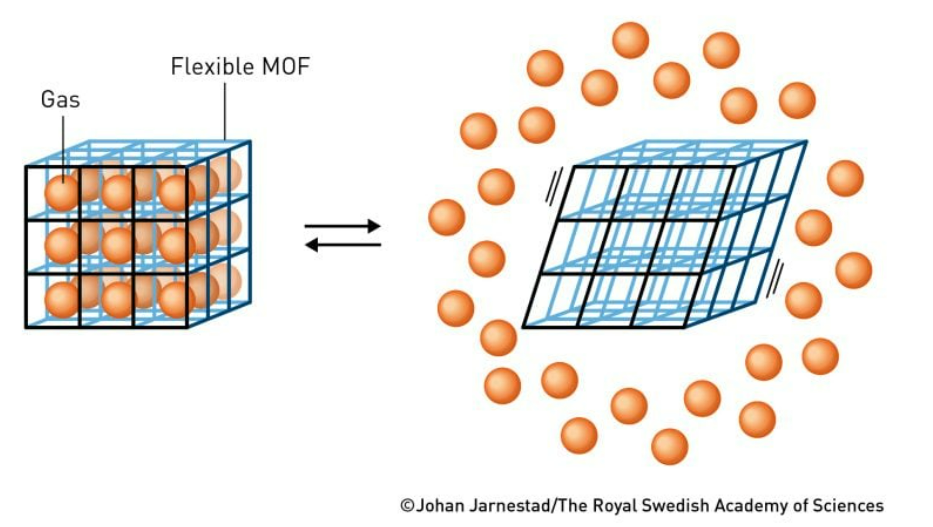
MOFs are networks composed of metal atoms connected to organic "linkers," which create a vast amount of empty space within. Their greatest advantage is their enormous internal surface area – just a gram of such material can have a surface area comparable to an entire football field! This vast "hidden" space makes MOFs ideal storage tanks for various gases. They can capture and store carbon dioxide (CO₂), reducing atmospheric emissions, or accumulate hydrogen – a potential fuel of the future. However, that's not all: MOFs are also used in water purification, chemical catalysis, sensors and even in medicine for controlled drug delivery.
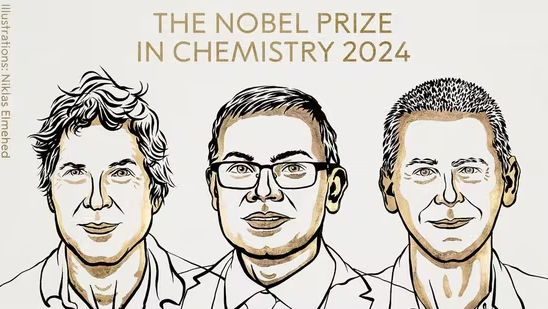
The discoveries of this year's Nobel Prize winners have revolutionised our understanding of matter – they have demonstrated that it is possible to design space at the atomic level and tailor its properties to specific tasks. This is an example of science that combines the beauty of precise chemistry with the practical potential to solve global problems.
Thanks to their work, perhaps soon materials with engineered porosity will help us breathe cleaner air, store energy better and manage the planet's resources more wisely.
Edit: dr inż. Paulina Bartos, Faculty of Chemistry, University of Lodz